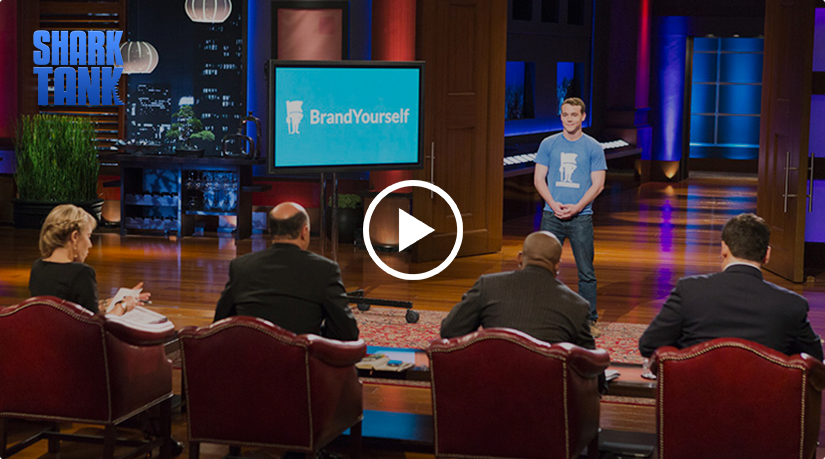
Starting this week, I will be returning to this blog. I’ve been busy over at brand-yourself as we prepare to launch our paid services this week. Speaking of which, if you are a job applicant or simply someone who feels you can benefit from a stronger online presence (everyone), sign up for our free services.
I have been blogging, but they’ve been guest posts on other blogs:
- 5 Powerful tools you need in your job search: Your social media powerbelt JobMob
- 4 steps to find an ideal job on twitter brandyourself
I’ve also been busy working on our first Ebook at brand-yourself: From Tweet to Hired. This should be coming out before next week. Very excited about this. Worked with a ton of great thought leaders: Gary Vaynerchuck, Ryan Stephens, Mocia Obrien, Bradley Will, Matt Wilson, Jacob Share, and others.
Check back for more to come.
I’ve been completely absent from this blog. I apologize. I’ll be back soon, though, with a ton of new content.
I’ve been busy working with brand-yourself.com, spearheading their social media efforts and helping them optimize their own blog content. I’m also writing some posts for their blog, mostly how-to’s and things of that sort.
I decided I’m going to post most of my educational material on that blog, and save this for more personal, funnier (hopefully) and general posts.
I’m also trying to figure out a cooler theme to use. I don’t feel like paying for one, so I’m stuck choosing between the free ones. I’ve been using this site for ideas. If you have any better ideas, let me know.
My classmates and I are graduating, and everyone seems to be asking this same question. For many, the process seems chaotic. Everybody is competing for the same jobs, applying everywhere and anywhere that may have an opening.
Unfortunately, this will get people nowhere.
The job market is poor, sure, but most of my classmates have failed to ask themselves two basic questions:
What do I want do to? Without considering this fundamental question, you are not going to find a job, let alone one you like. When you try to apply to the widest array of jobs possible, you only end up marketing yourself in terms of your lowest common denominator. Choose an area you are passionate about than ask yourself this:
Why would someone hire me to do it? In other words, what makes you more qualified than the next guy. This involves doing a little research. If you want to get into PR or advertising, learn how to navigate social media and the basics behind SEO. It’s a simple concept. Instead of waiting around hoping you miraculously find that dream job, start developing the skills that will make employers seek you.
Since very few places are hiring, we are actually at an advantage. Figure out what you really want to do, find someone who does it, then offer to help for free. If you are genuinely interested, show initiative and have done your homework, very few places will turn down free work. In the meantime, you get some valuable hands on experience, putting you one step ahead of the competition, and meet some valuable contacts along the way.
As someone yet to graduate himself, I may not be qualified to give advice on this subject, but this guy is. This post offers great advice every graduating senior should read. Among other things, he reinforces the idea that seniors should worry less about landing a job at any cost, and more on developing the skills that will help him down the road. My favorite excerpt:
“If you haven’t realized it by now, there is no such thing as job security. You’re fooling yourself if you think a steady paycheck will ensure a safe future. The only real form of security is working on yourself. Read as much as you can. Put experiences under your belt that can open doors in the future. Meet smarter people than you and do some free work for them. These are the kinds of things that can help mitigate your risk against a bad job market. And in the long run, you’ll be in a far better position than everyone else.”
If you haven’t seen the catastrophe Dominos is currently dealing with, than you don’t own a computer. The lesson is simple: social media is a force to be reckoned with. When anyone with a video camera and Internet access can damage a 50 yr old brand with 2 minutes of footage, its time to reevaluate your your public relations strategy. Dominos had to learn the hard way. Luckily, the rest of us can just learn from there mistakes.
Audit online conversation. People are discussing your brand online, and it’s not always good. Whether it’s a blog about unethical business practices, or a YouTube video realizing your consumer’s biggest fear, these issues need to be discovered as they begin to spread. Brands need to dedicate a team to monitoring social sites like Facebook, twitter, YouTube, etc.
Respond RIGHT away. Speed and transparency are key. Things on the web will not simply fizzle out. Once you discover a growing concern spreading on the web, address it right away. Dominos waited too long. They showcased a fundamental misunderstanding of the web when they hoped “it would just go away.” One of the advantages of the web is a direct connection to your audience. Dominos, or any other brand, do not need traditional media to respond quickly. They can confront the issue head on, quickly, and honestly. Dominos eventually responded, but it should have been done sooner.
Make sure you’re response is accessible. Once you respond, make sure people see it right away, preferably side by side with the opposing message. This involves using some SEO techniques. When the incident first happened, the video dominated the first page of google search for Dominos, with six results linking right to the video. The YouTube clip was/is the first result next to the Dominos website itself. Now, the link is followed immediately by Domino’s own response. While the damage has been done, they are alleviating further harm by keeping “their side” visible to the public.
Social media is transforming the way people communicate. Small, isolated incidents can quickly gather speed and dominate the press. As Domino’s spokesman, Tim McIntyre put it, “We got blindsided by two idiots with a video camera and an awful idea, even people who’ve been with us as loyal customers for 10, 15, 20 years, people are second-guessing their relationship with Domino’s, and that’s not fair.” Fair or not, it’s a reality. Companies need to reevaluate their PR strategies so they can be empowered when it comes to social media, rather than powerless.
I used two recent posts to criticize the newspaper industry. I argued they need to stop focusing on old print models that no longer work and begin concentrating on creating new models that will. Instead of figuring out how to squeeze money out of their consumers, they should be focusing on creating value for them. I’m going to use this post to highlight simple opportunities newspapers are missing due to a misunderstanding of their role in today’s new media landscape. I will probably use The New York Times as an example a bunch of times because they have the largest online audience, so many of my criticisms apply directly to them.
First of all:
Newspapers never really made money off subscriptions in the first place. Those were only in place to offset production costs, which don’t exist online. The real money in newspapers always came from attaining a valuable readership then selling it to advertisers. Newspapers gathered this readership by offering a service. They reported valuable content, then packaged and delivered it right to the consumer’s door.
On the web, people no longer need a newspaper to deliver all their content in a single package. In fact, they don’t want it. They split their interests across a sea of infinite choices and sources. When consumers can literally go anywhere for their content, newspapers need to work harder than ever to maintain a valuable readership. Which brings me to my first simple missed opportunity
Use better Search Engine Optimization techniques. Most people use search engines to gather their information. The New York Times is not doing nearly enough to ensure their content is among the top results. For starters, they don’t enable outbound links in their stories. This is huge hit because links play an enormous factor in search engine ranking.
Second, they don’t spend enough time tagging relevant keywords in their HTML, if they even tag any at all. As a tech fan, I searched google for Iphone 3.0 today. Even though the Times is currently running multiple stories on it, none of them showed up on the first two pages of results. Sure, they were at the top of google news, but like most people, I don’t look exclusively at news to get my information on any given subject. I decided to look at what keywords they used to tag their articles, and still can’t believe what I found. “Technology, start-ups, internet, enterprise, gadgets.” That’s it. They didn’t even tag the term Iphone 3.0 which is what the article is about! You don’t need to know anything about SEO to know that those are not the best 5 words to describe an article specifically about the Iphone.
The Times gets a huge portion of their audience from search engines and outside links. As soon as they start embracing the strategies and tactics that will foster even larger audiences, the sooner we”ll see some forward growth.
However, simply attracting audiences is not enough. They need to keep them there.
Create value for users by allowing customization. The Times no longer promotes MY TIMES which is a big mistake. No two people are alike and on the web people can customize their content so they receive stories on topics that appeal directly to them. If papers don’t make this easy to do, there are plenty of outside sources that do.
Concentrate on smarter, more profitable advertising. Once they have their audience, they need to focus on the unique advantages only new media can offer: individual addressabilty, targeted advertising based on online behavior, more relevant audiences, less waste and tracking technology that can measure an ad’s success. All these things make the audience more attractive to advertisers and will help revamp online ad revenue. Papers can profile their users based on interests, location, behavior, stories read, and a number of other things. They can use this information to serve users relevant ads and charge premium prices.
The newspapers have failed to do this even in the most basic sense. For example, even though almost half of New York Time’s online users are across seas, people in England and Ireland see the same ads as people in New York or LA. If you don’t see a problem with this, I wouldn’t feel too bad. Neither do the execs at the New York Times.
Start cutting production costs for print papers. With so many people moving to online– and that number is only growing– papers need to reconsider how much they spend on their print paper. Henry Blodgett has some helpful ideas. While I deeply disagree with his assertion to start charging online, his ideas to consolidate news rooms, cut editors and charge more for print subscriptions are steps in the right direction. There is no need to spend so much money on packaging, printing and distributing news in a one-size-fits-all package, when the audience no longer wants it that way.
It seems like everyone is suddenly very concerned about how internet companies use their personal information to sell ads. They hear words like “tracking” and “targeting” and begin rambling about 1984 and big brother.
It’s not that privacy online isn’t an important issue–it is– it’s that most people complaining haven’t stopped to think about what it is, exactly, they are protesting. After all, is seeing ads catered to your personal interests and behavior really such a bad thing? If you like snowboarding, wouldn’t you rather see ads for half price lift tickets than ads for kitchen appliances?
I think half the problem may be people aren’t sure how and why their information is being used. But before we discuss how online tracking works and how it benefits you, we better set a few things straight.
Targeting and tracking are not new concepts. The media has always collected extensive research on you so they can sell ads at higher prices. And it’s not a bad thing. It would be a waste to run ads for tampons during monday night football or offer deals at HOOTERS in bridal magazines. When the media knows who their audience is, everybody wins: You see ads you are actually interested in, advertisers don’t waste money on people who aren’t, and the media makes more money so they can continue to produce high quality content (theoretically, of course).
Online advertisers are doing the same thing, just more efficiently. On the web, audiences are spread across millions of different channels and choices, segmenting consumers into more specialized niches than ever before. While this makes it harder to reach everyone in one spot, it has made the public more relevant than ever before. Media companies can figure out what you’re interested by observing your online surfing habits: sites you visit, things you shop for, blogs you read, etc, and then serve you ads that fit that profile.
It’s the same model we’ve seen before, just more advanced and in depth. When there are millions of users spread all over the web, and an equal amount of advertisers looking to send their message, it makes sense to use data to pair them up correctly.
Online targeting is not intended to exploit your personal information, but rather serve you ads you are more likely to appreciate. If done properly, online ads will evolve from annoying intrusive messages, to helpful, meaningful recommendations. The trick will be ensuring users their information is safe and used to enhance their online experience.
Here’s a cool post I found today. Which dead writer’s blog would you read if they were still alive today? There’s only one rule. They have to write about current events, not about their own historical experiences or biographies.
I’d have to go with Kurt Vonnegut. No one did a better job of pointing out the absurdities of society without sounding cynical or pretentious. His simple, direct and profound observations could cut anyone down to size, no matter how important they thought they were. In today’s world, where everyone seems to think they’re more important than the next, from tax-stealing investment bankers to celebrity-crazed gossip-bloggers, Vonnegut’s voice would at the very least, provide an amusing backdrop.
It’s never going to happen, just let it go.
In my last post I argued that part of the reason newspapers are in such a trouble is because they can’t seem to figure out that print is not the same as web. Until they do, I guess we’re going to have to suffer through “expert” after “expert” dreaming up ways where papers can charge for content. The latest “solution” trend has people coughing up micro payments for individual stories rather than paying blanket subscription fees.
My personal favorite is David Carr’s Itunes for News idea. He purports since people are willing to pay for music even though it is available for free, maybe they will for news too!! Comparing news to music is wrong for three reasons:
1) News is disposable
2) News is not unique the way music, or any form of art, is
3) Newspaper revenue is ad-based
People will pay for music so they can listen to it over and over again, whenever they want. They will not do the same for individual news stories.
David Carr, and all the others who think that a system of micro payments will solve the problem are missing the point. It doesn’t’ matter how expensive or cheap a story is to the consumer. Setting up pay walls for news won’t work because they don’t fit into the basic structure of the web. The fundamental function of the web is to share, link and distribute information with other people. Any model that makes your content harder to discover or harder to access will inevitably fail.People find their content all over the internet, through links and search engines, and then like to share that content with their friends. People will ignore any model that makes this harder to do. In essence, any vehicle that sets up pay walls are going to be left out of the loop. You would think newspapers might consider this since such a large portion of their own readers come through search engine queries and inbound links.
Papers need to worry less about charging their users–thus driving them away– and more about creating value for them so they keep them coming back. When users have infinite choices, you need to do everything you can to make sure they choose yours.
It’s no secret. Newspapers are dying and if they don’t do something soon, we may very well see the biggest names go out of business. In fact, some of them already have.
Suddenly, after centuries of stable, profitable business, people are abandoning the newsstands and going online to get their news for free. And newspapers have no idea how to react.
EXPERTS SUGGEST TAKING A STEP BACKWARDS
“Experts” of every kind have emerged offering different variations of the same solution: start charging for content.Experts like David Carr, Gerry Starch and even the former editor of TIME, all acknowledge that if newspapers want to survive, customers need to start paying for their services. And all of them, every last one, couldn’t be more wrong. By proposing a fee for their content, the experts are showcasing a fundamental misunderstanding of how the web works.
INFORMATION WILL BE FREE WHEN YOU CAN GET IT ANYWHERE ELSE
If newspapers start charging a user, they are just going to go somewhere else. It’s that simple. There are literally millions of places to get news. Even if all the major papers in the US collaborate and decide to collectively start charging as Joel Brinkley suggests (not likely), there are still news sites like MSNBC.com or CNN.com, oversea papers, like the guardian.com or BBC.com, and hundreds of other sites.
News is a commodity on the web, and when a commodity is offered everywhere else for free, consumers will never pay for it.
Why pay for a whole a paper, when you only want to read a few stories anyways? At best, charging would make stories harder to find, but only for a little while. All it would take is a single entrepreneur or Internet company to start submitting news for free, and the whole system would turn on itself.
THE INDUSTRY IS NOT DYING. IT’S MORPHING
The old model of charging for content is dead. Accept it and move on. The reason we’ve seen no serious progress is because the industry seems more concerned with fitting old models where they don’t fit instead of just adjusting and creating the new ones that will.
The winners will be the ones who quit focusing on the old models that no longer work–charging users directly for content– and instead focus on the unique advantages that only new media can offer: individual addressability, targeted advertising based on online behavior, more relevant audiences, less waste and tracking technology that can measure an ad’s success.
It’s unclear exactly what is going to happen to the paper industry, but I can guarantee you this: the papers that fail to acknowledge the differences between web and print and fail to take advantage of them, will be the first to go.